Rarity in Rarest Answer Party measures how few players submit the same or a similar answer. The practical goal is not to find the strangest word possible. It is to submit an answer that clearly matches the prompt, is recognizable, and is less obvious than the choices most players will make. The usual result labels are Common, Rare, and Rarest.
Rarest is a relative result, not a permanent list of winning answers. A choice that is unusual in one room can become common when several players know the same strategy, while a familiar answer can be rare in a different round. The strongest approach is therefore to identify the prompt quickly, move away from the obvious answer, and stop searching when you have a clear, defensible alternative.
What Common, Rare, and Rarest mean
The game compares submitted answers after the round. The result describes how much overlap your answer has with the other players’ answers and can affect your points and leaderboard position. The evidence does not provide a complete rarity formula, so the labels should be treated as outcomes of the current room rather than guaranteed values attached to particular words.
| Rarity result | What it indicates | Player decision |
|---|---|---|
| Common | Several players chose the same or a similar obvious answer | Use only when a clear answer matters more than extra rarity |
| Rare | Fewer players selected the answer, while it still fits the prompt | Prefer this as a dependable target when the timer is moving |
| Rarest | The submitted answer has the least overlap in the current comparison | Take it when the answer is both unusual and clearly valid |
A Common result is not automatically a mistake. It can be the correct outcome when the prompt is narrow or when the timer leaves no safe alternative. Rare is often the useful middle ground: it improves your chance of standing apart without requiring an obscure answer. Rarest can produce the best result, but it depends on the other answers in that particular round.
The summary records a video example of a Rarest answer receiving 250 points. That is an observed example, not a fixed payout or a promise that every Rarest result is worth 250 points. Do not use that number as a scoring formula. The available material does not establish a fixed point table, exact tie rules, or a permanent answer database.
Review a Rarest answer and its points result
This moment supports the article's distinction between an observed Rarest result, including a 250-point example, and a guaranteed scoring rule.

How to find a less obvious answer
Start by reading the prompt literally. Confirm whether it asks for a country, vegetable, occupation, character, song, vehicle, food, or another category. A broad prompt and a restricted prompt are not interchangeable. An answer can be rare and still fail if it belongs to the wrong category or only matches through a weak interpretation.
Next, predict the answer most players will type first. This is the obvious answer reference point. For a food prompt, that may be a familiar staple; for a location prompt, a well-known country; for entertainment, a major character or famous title. You do not need to write the obvious answer down. You are using it to identify the direction in which the room is likely to cluster.
Then choose a specific, recognizable alternative. Useful directions include:
- a particular species or variety instead of a broad food or plant name;
- a smaller country or region when the prompt allows places;
- a supporting character instead of the central character;
- a specialist occupation instead of a broad job title;
- a less prominent song, work, or instrument that still belongs directly to the requested category.
Specificity increases rarity potential because it narrows the set of players likely to choose the same term. It does not give permission to invent a connection. If the prompt asks for a vegetable, a named vegetable variety can be a sensible direction; a random word associated with farming is not. If the prompt asks for a character, the name must identify a character rather than merely an actor, franchise, or setting.
Choosing between a safe and extreme answer
The best answer changes with the timer. When there is enough time, compare two or three candidates. Ask which one is less obvious, directly belongs to the category, and can be typed accurately. Once one candidate satisfies those checks, submit it rather than continuing to search for an even stranger possibility.
When only a short amount of time remains, prioritize validity and spelling. A familiar but defensible Rare candidate is usually better than an extremely obscure word that you cannot finish, explain, or recognize. The summary specifically warns that hesitation can result in no submission, while a questionable category match may lose its value even if nobody else chose it.
Use this decision order:
- Category: Does the answer directly satisfy the prompt?
- Clarity: Would another player understand what the answer names?
- Spelling: Can you enter it correctly before the countdown ends?
- Overlap: Is it less immediate than the answer most players will use?
- Timing: Is there enough time to reconsider, or should you submit now?
This order prevents the common mistake of treating obscurity as more important than correctness. Rarity is a comparison between valid submissions; it is not a substitute for a valid submission.
Prompt types and useful rarity directions
Different categories reward different kinds of thinking. For food prompts, move from the most familiar generic answer toward a regional dish, specific variety, or less frequently named item, provided the wording still fits the prompt. For places, consider a smaller country or a less commonly cited region when the prompt permits it. For characters and entertainment, look beyond the lead while keeping the name recognizable enough to avoid confusion.
For occupations, a specialized role can be a better choice than a broad label. For instruments or vehicles, a less common but established example may separate your answer from the room. These are search directions, not guaranteed answer lists. The same candidate may perform differently in another lobby because the other players, prompt wording, and difficulty setting change.
Do not force specificity when the prompt excludes it. If the prompt asks for a particular type of item, a broader parent category may be rejected or may not be understood as a direct match. Read qualifiers such as a region, time period, role, or format before selecting a niche answer. A short pause to confirm the scope is more valuable than submitting a clever answer to the wrong question.
Rounds, points, and changing rooms
Your answer is evaluated against the answers submitted in the same round. That makes the result sensitive to the room. Players may independently choose the same unusual answer, and a previously successful answer can lose its advantage after it becomes familiar. The available evidence supports the broad relationship that rarer answers generally have better scoring potential, but it does not establish an exact points equation.
Multiple rounds give you a chance to adjust. If a broad, obvious answer produced Common, narrow the next candidate while preserving direct category fit. If an unusual answer caused uncertainty, return to a clearer alternative rather than becoming more extreme. The leaderboard reflects round outcomes, so a consistent stream of valid, less-overlapping answers can be more useful than repeatedly gambling on words that may not be accepted.
The game also exposes Easy, Medium, Hard, and Random difficulty servers in its Roblox description. Private servers can allow match customization, and the current game interface is the authority for the settings available in your session. Treat difficulty as a context signal, not as proof that a certain answer is safe or that a particular scoring rule applies.
Common mistakes that reduce rarity
The first mistake is submitting the most obvious answer without considering overlap. That is likely to produce Common when the prompt has many valid choices. The second is overcorrecting with an answer so obscure that its category is unclear. The third is changing answers repeatedly after another player appears to choose the same idea; a last-second replacement can create a spelling or validity error.
A better reaction to overlap is to keep a backup candidate ready. If another player submits your first choice and time remains, move one level more specific while checking the category again. If time is nearly gone, submit the original only if it is still clearly valid, or use the safe alternative you can type reliably. Do not chase a hypothetical Rarest result after the point at which a clean submission is at risk.
Adjust your answer when another player overlaps
This moment illustrates the overlap problem described here: another player may appear to take the same answer, so a backup or more specific valid choice can matter.
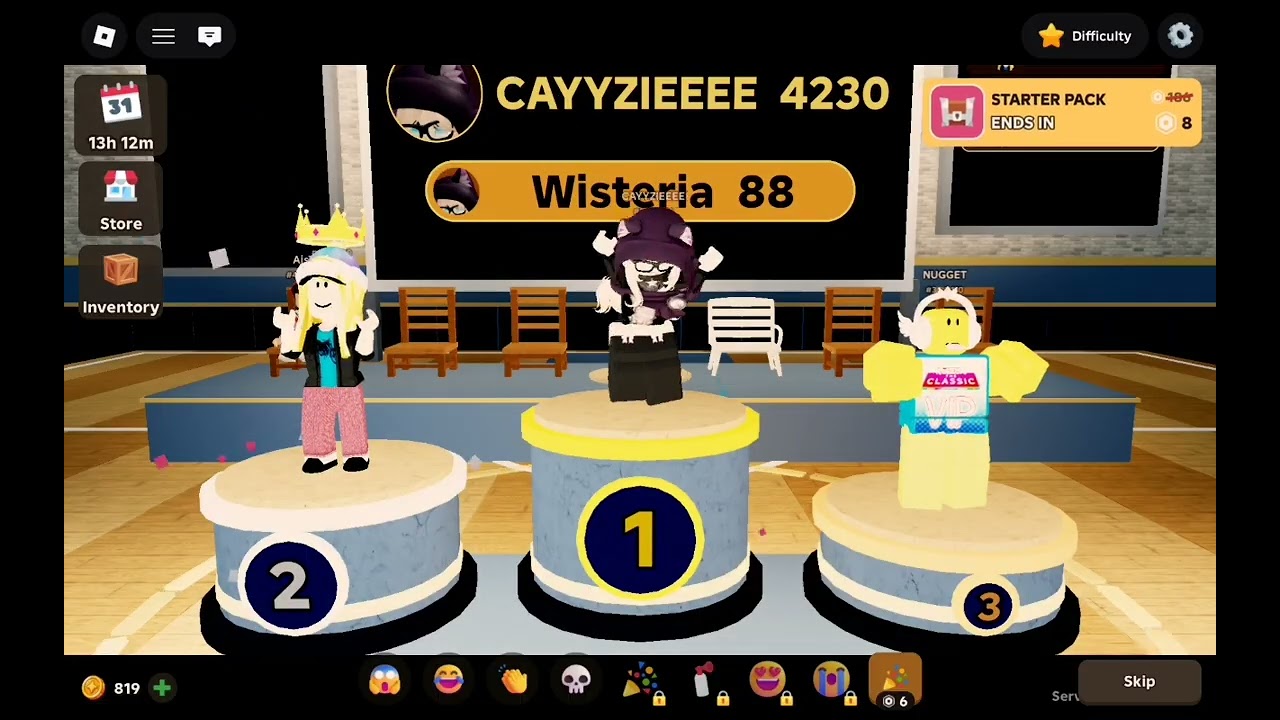
Also avoid assuming that a word is rare because it performed well in a video or in another round. The 250-point example demonstrates that a high result can happen; it does not make that answer universally optimal. Room composition and prompt interpretation remain decisive.
Rarity limits to remember
There is no supported fixed list of permanent Rarest answers in the available game information. The result depends on the current comparison, and the game materials do not document the full algorithm, fixed scoring formula, or official answer database. Use the current prompt, timer, and submitted-answer context rather than relying on a memorized guarantee.
In short, aim for a clear answer one step away from the obvious choice. Verify the category, use specificity where it naturally fits, and submit before uncertainty becomes a missed round. That balance gives Rare and Rarest results a realistic chance without sacrificing the validity that makes the comparison meaningful.
Rarest Answer Party rarity FAQ
Can the same answer be Rarest in different rounds?
Yes. Rarest compares the answers in the current round, so an answer’s result can change when the room, prompt, or player choices change. Treat past results as examples rather than permanent guarantees.
Does Rarest always award 250 points?
No fixed 250-point payout is established. The available material records one 250-point example, but it does not document a complete scoring formula or promise that every Rarest result will have that value.
What should I do if I cannot think of a niche answer?
Submit the clearest valid answer you can spell before the timer ends. A defensible answer with less rarity is safer than a last-second term that may not match the category or may fail to submit.